This site uses cookies to provide you with a great user experience. By visiting monetamarkets.com, you accept our cookie policy.
Allow all
This site uses cookies to provide you with a great user experience. By visiting monetamarkets.com, you accept our cookie policy.
Allow all
This website is operated by Moneta Markets Ltd, which is not authorised or regulated by the UK Financial Conduct Authority (FCA) and does not offer or promote services to UK residents. Access to this website is restricted in the UK and the content is not intended for distribution to, or use by, any person located in the UK. If you believe you have reached this website in error, please exit the page now

Please note that Moneta Markets operates this website and its services are not directed at residents of your jurisdiction.
The information on this site is not intended for distribution to, or use by, any person in any country or jurisdiction where such distribution or use would be contrary to local law or regulation.
If you have arrived here in error, we kindly advise you to exit the site.
Continue to Site

 English
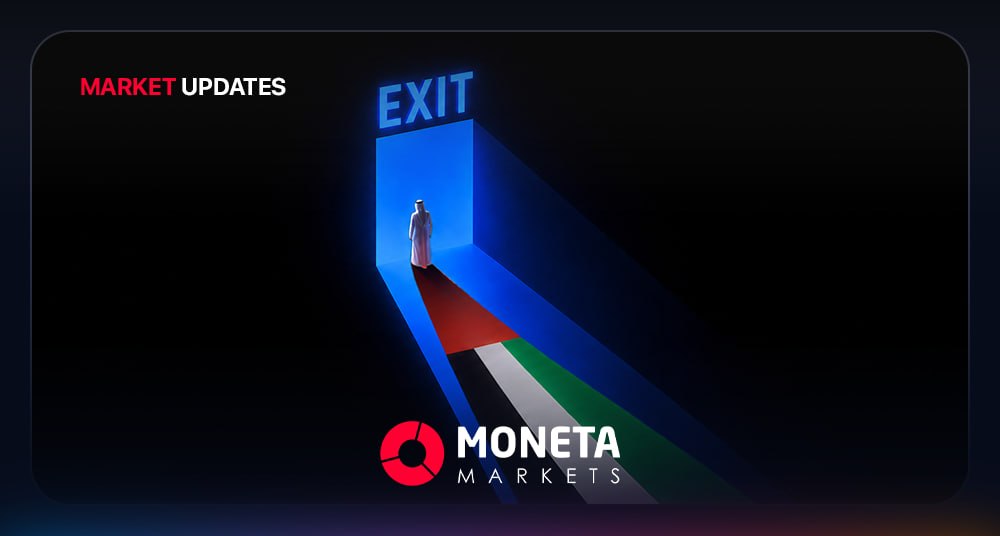
One country walked out of the world’s most powerful oil cartel. Currencies are already moving. Here is where the opportunity lies.
When a major oil producer breaks ranks with OPEC+, the impact does not stop at the price of crude. It ripples through every currency pair on your screen, every central bank’s inflation forecast, and every import balance sheet on the planet. The United Arab Emirates has done exactly that, and the market is already responding.
OPEC+ is a coalition of the world’s largest oil-producing nations, including Saudi Arabia, Russia, and the UAE, that collectively manages global oil supply to keep prices stable and elevated. Their mechanism is straightforward: each member agrees to a production quota, supply stays controlled, and everyone benefits from higher prices.
The UAE, after years of investing billions into expanding its production infrastructure, grew frustrated with a quota it felt no longer reflected its true capacity. After prolonged negotiations, the UAE made its move and began pumping freely. More oil enters the market, supply rises, prices fall, and the currency cascade begins.
Cheaper oil hits petrocurrencies hardest and fastest. The Canadian Dollar (CAD) moves in near-perfect inverse correlation with crude prices, making USDCAD the cleanest oil-proxy trade in the market. The Russian Ruble (RUB) is even more exposed, given that Russia’s entire federal budget depends on oil revenues. A period of sustained price weakness should see USDRUB spike sharply.
On the other side, import-dependent economies stand to gain. India imports approximately 85% of its oil, meaning cheaper crude directly narrows its current account deficit and provides fundamental support for the Rupee (INR). Japan tells a similar story, where energy import relief feeds into the broader macro picture and makes USDJPY downside increasingly viable.
The US Dollar plays both sides of this trade. In the short term, uncertainty drives safe-haven demand and the DXY firms. Over the medium term, cheaper oil eases inflationary pressure, gives the Federal Reserve room to soften its stance, and weakens the dollar. Two timeframes, two very different trades.
This is precisely the kind of macro shift that creates real, actionable trading opportunities. The traders who benefit are those who are correctly positioned and backed by the right platform. At Moneta Markets, traders get live pricing across every major pair this move is driving, including USDCAD, USDINR, USDRUB, and crude oil itself. The opportunity is live. The question is whether you are ready to act on it.